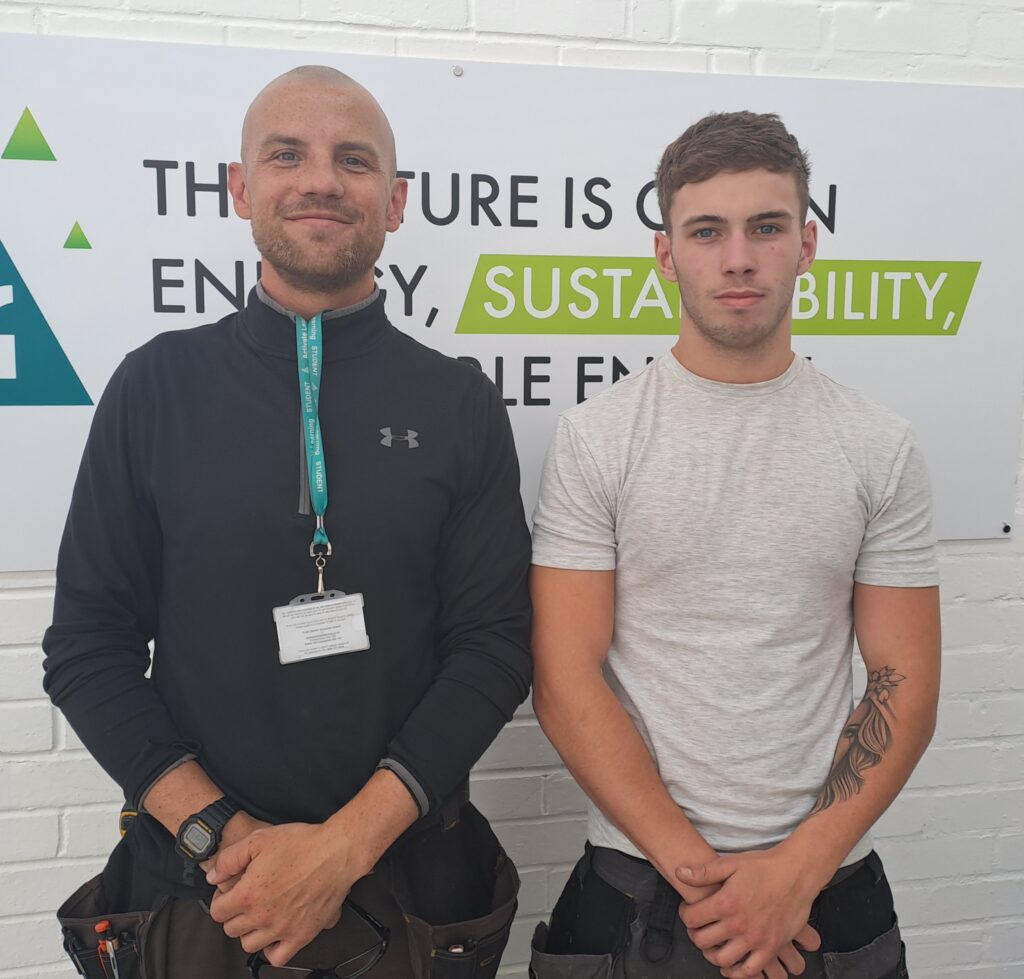
At Activate Apprenticeships, we work with apprentices at every stage of their training — and every stage of life. We sat down with Bartosz Brzezicki (36) and Kodie Calcutt (19), both in the second year of their plumbing apprenticeships, along with college Performance Coach David Johnson, to talk about what it’s really like to learn the trade, balance work and study, and plan for the future.
Why plumbing?
Bart’s route to plumbing was anything but typical:
‘I’d worked in management for years—including at Honda—but when the plant closed, I wanted something new. My neighbour suggested plumbing, and I liked it straight away. My company offered to fund my training, and my wages are a bit higher as an adult learner, so I chose the apprenticeship route.’
He had run his own business before, but wanted to learn a hands-on skill that would always be in demand, and his employer recognised his potential:
‘Plumbing is something you can take anywhere. You can go self-employed, work for a big company, or move into management. There are so many options.’
Kodie’s path was more direct—with a family connection:
‘My brother runs a plumbing and heating company. I joined him straight from school, but I wasn’t sure it was the right fit, so I tried carpentry. However, I soon realised that plumbing was a better fit, and I returned.’
Life in year two
Bart works mainly in the commercial sector:
‘We start at 7:30am and usually finish around 4pm. The only downside is the travel — sometimes over an hour each way—but I’ve learned a lot, especially skills we don’t use at work, like soldering, which I picked up at college.’
Kodie’s work is in domestic environments, which gives him variety day to day:
‘I’m in different houses almost every day. I like the variety and meeting new people. Commercial work feels like the same site and same people every day. I prefer adapting to each new situation.’
Performance coach David sees the benefits of both:
‘Domestic work gives you a wide range of small jobs and direct customer contact. Commercial projects tend to be bigger, but they teach teamwork on a larger scale. Both have their advantages.’
Challenges
It’s a physically demanding trade, and most of their peers regularly visit the gym, agreeing on the importance of keeping fit and healthy.
Bart is quick to mention the strain of getting to work:
‘Travel is the hardest part for me, especially with unreliable trains. There’s also the pressure of exams. We passed them all the first time this year, but it’s still stressful.’
Working in a commercial environment, he also had to find domestic projects to complete his portfolio. His employers assisted with this, but many apprentices need to utilise a day off to achieve this.
For Kodie, the challenge was adapting to the demands of working life and a different dynamic with his brother:
‘It wasn’t easy adapting to my brother being my boss, but we worked it out and we’ve got really good chemistry now, and we help each other out.’
‘When I first joined, I really wasn’t ready. It’s a big change from school to working five days a week. You don’t see your mates as much. It took me a while to adjust.’
David understands this transition well:
‘It’s a huge commitment—from employers, the college, and the apprentices. The lads are proof there’s no single right age or background to start. We see school leavers, career changers, and everything in between.’
Support in college and at work
Bart appreciates the college’s practical teaching:
‘We have reviews every 12 weeks with our student coach. He’s always reminding us to keep up with our portfolio so we don’t fall behind. College has taught me techniques we don’t use on commercial projects, like soldering and bending copper pipe. Those skills make you more employable.’
But he admits it can be tricky balancing workplace demands:
‘My company is bigger, so sometimes I have to push to get time for my portfolio, but they’ve promised a management role once I finish. That’s a big motivator.’
Kodie’s situation is different—his boss is his brother:
‘He pushes me to do well. You have to take constructive criticism on the chin, but it’s worth it. At the end of the day, he wants me to be good at the job, not just ‘good enough’.’
David stresses the role of communication:
‘We keep employers updated so they know how their apprentice is progressing, and we encourage apprentices to speak up if they need more support. It’s a three-way partnership.’
Advice for future apprentices
Both apprentices have strong opinions about starting out:
‘Try the job out before you commit by speaking to companies and getting some work experience. And make sure that you study and prepare for your exams. It’s a huge relief finding that you’ve passed the first time! ‘Bart
‘Be absolutely sure before you start an apprenticeship. If you’re not ready, you’ll have to work twice as hard to keep up. A college course could help you decide, before you commit. You’ll also need to be ready to live on a lower wage for a couple of years while you train.’ Kodie
Bart adds:
‘An apprenticeship means you’re earning and learning from day one, with no student debt, and you leave with both a qualification and work experience. That’s something uni can’t give you.’
Looking ahead
Bart is already thinking long-term:
‘In five years, I’d like to move into a management role, as promised by my company — or possibly run my own business again.’
Kodie’s ambitions are shaped by where the industry is going:
‘I’ll definitely stay in domestic work; I like meeting new people and adapting to different situations. I also want to move into renewable energy. It’s the future.’
David agrees:
‘From next year, gas won’t be fitted in new-build homes — renewables are where the industry’s heading. The apprentices who understand that will be in high demand.’
It’s a four-year commitment for plumbing apprentices, but the rewards are great.
Tutor Mandeep Khalsa gave us further insight into the future of plumbing:
‘New technologies, such as air source and ground source heat pumps (very common in other European countries), are now becoming more prevalent in new build estates. They are also being retrofitted into a lot of existing buildings. However, gas still plays a large part in the country and will remain a significant presence long after our lives until greener technologies take over and fossil fuels are phased out.’
If Bart and Kodie have inspired you to consider a career in plumbing, you can find out more about becoming an apprentice and search for vacancies in your area. Activate Learning colleges also run full-time Level 1 and Level 2 plumbing programmes. Some offer a multi-trade programme, where you can sample a variety of trades.