


Why you should study Motor Vehicle
The automotive retail Industry provides employment for over half a million employees who work for approximately 70,000 employers. It is a major contributor to the UK economy.
The growing complexity of today’s vehicles, and the pressure to deliver a high-quality customer experience, requires the retail automotive sector to attract and train high calibre individuals and this is reflected in the elements of the Apprenticeship Standard.
Job profile
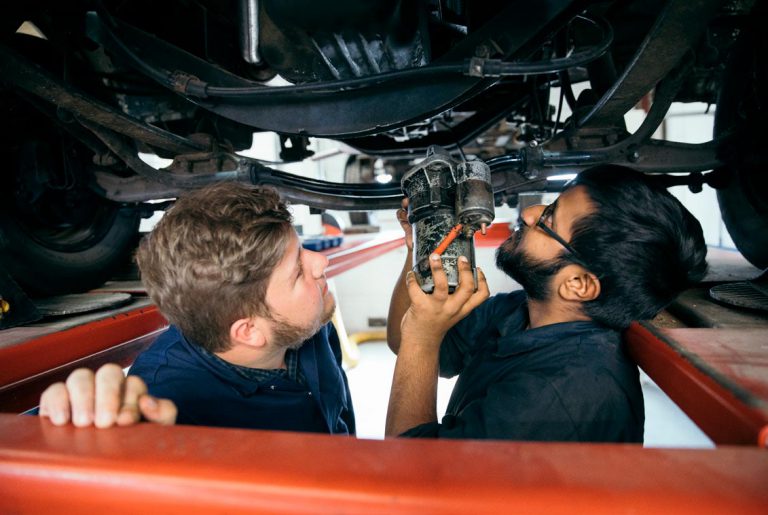
A motor vehicle service and maintenance technician services and repairs light vehicles such as cars and vans and works either in dealerships which focus on a particular manufacturer, or in an independent garage which deals with many different makes of vehicles.
In a large dealership the Technician will typically report to the Workshop Controller, who in turn reports to the Aftersales Manager and liaises with the Service Reception. In smaller garages the Technician will report directly to the owner or Garage Manager.
What you will learn:
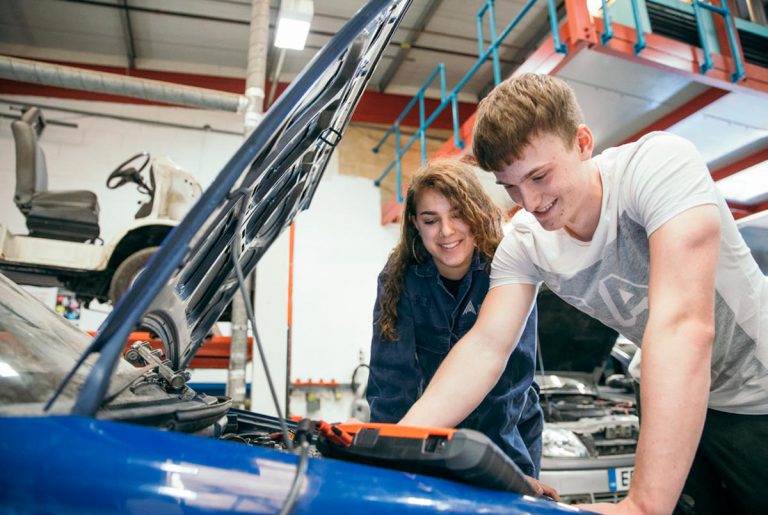
The technician must be able to work independently but also operate as an effective team member and have good customer handling skills. They will understand how their workshop and the dealership/garage functions from a commercial perspective and identify ways in which they can work more efficiently.
Technicians working in large dealerships work with other departments, for example carrying out work for the Sales Department and ordering parts from the Parts Department, whereas apprentices in smaller independent garages may be called upon to carry out some of the function of the other departments themselves, for example managing their own delivery of parts.
The technician will work on all the systems found within the vehicle. The day-to-day work ranges from replacing simple parts through to solving complex faults with the use of diagnostic methods and equipment. The tasks faced are constantly changing, driven by the introduction of ever more complex technologies and diagnostic techniques.
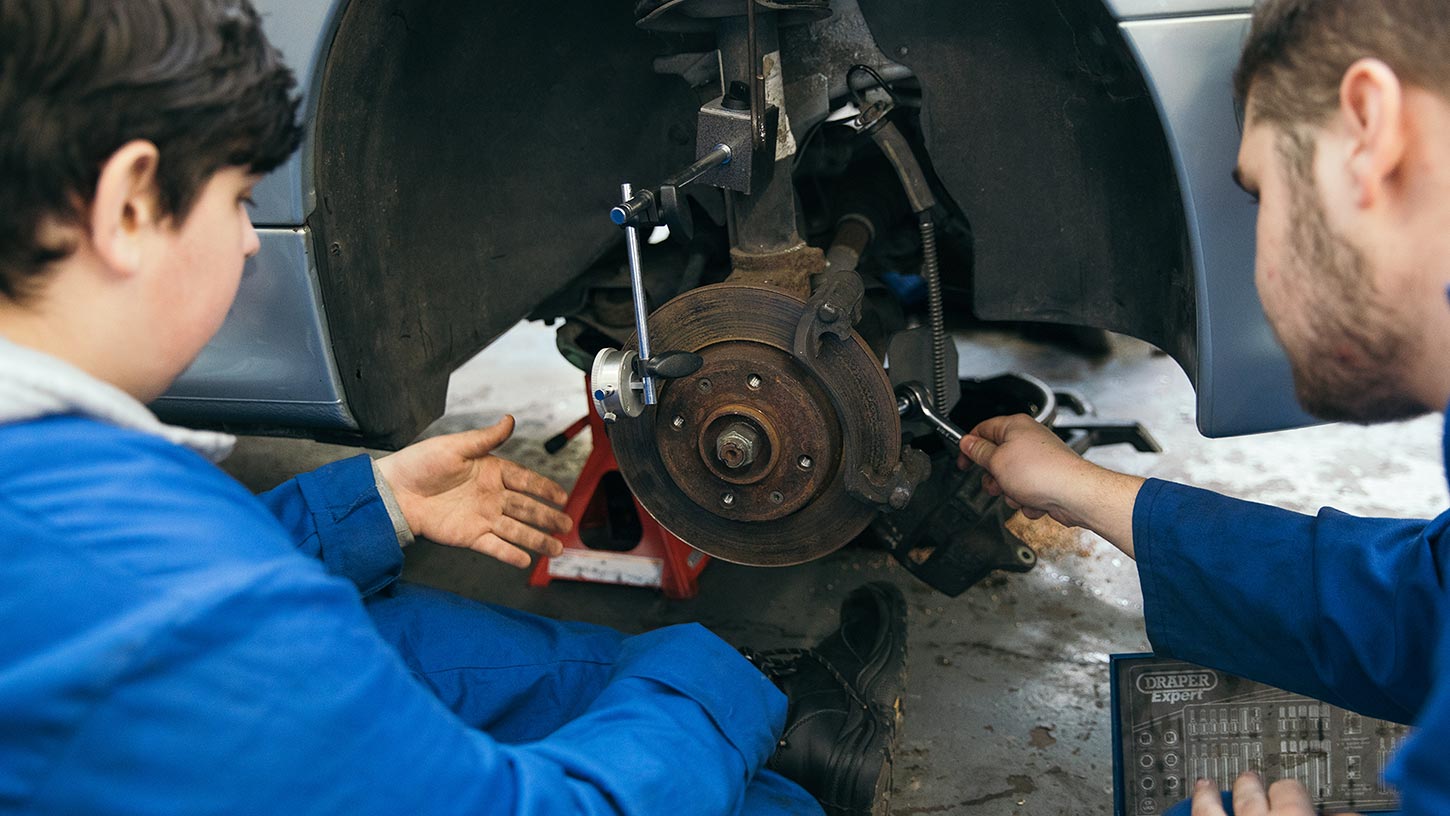

You will attend your college campus one day a week to undertake practical and theory teaching sessions.
You will be provided with a training manual of tasks to complete, both within the workplace and college. This forms the basis of assessing whether you can take your end point assessment.
You’ll also complete a log of “off-the-job” hours (tasks completed as part of your normal working day).
At the end of the training programme you, your employer, and a representative of Activate Apprenticeships will decide whether the apprentice has met all the required standards to be put forward for end point assessment.
An end point assessment is where you’ll need to demonstrate to an independent assessor from City & Guilds the skills you’ve learnt during your apprenticeship. When you are successful, they will award you with your Level 2 qualification.
The assessment consists of:
- two online knowledge tests
- a skills Test (five tasks)
- a professional discussion with the assessor
Whilst any entry requirements will be a matter for individual employers, typically an apprentice might be expected to already have the following qualities:
- an interest in the way vehicles operate
- able to demonstrate general analytical and mechanical skills
- a capacity for mechanical reasoning and the potential to research, analyse and solve problems
- well organised, methodical and good attention to detail
- good spatial awareness; able to work in a team and to communicate well both orally and in writing
- cares about delivering excellent service – both internally and externally to colleagues and customers.
Before the Standard is met, all apprentices must hold a certificate that meets the EU’s 2014 F-gas regulation. Apprentices without level 2 English and maths will need to achieve this level prior to taking the end-point assessment.