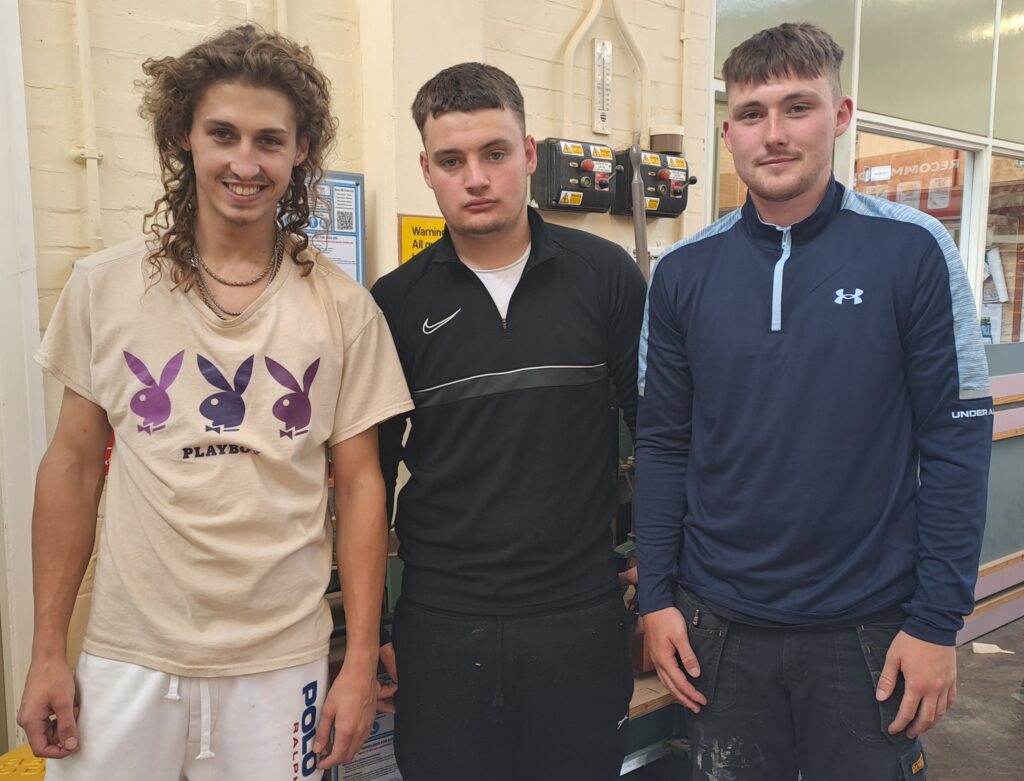
Three first-year carpentry apprentices at Reading College — Casper Lagerborg (22), Sonny Burton (17) and Aaron Reed (21) — sat down with Performance Coach David Johnson to reflect on their first year in the trade. With different backgrounds, experiences and routes into carpentry, the apprentices share what it’s really like balancing college and site work, the surprises they’ve found along the way, and where they hope to take their skills in the future.
Finding their way into the trade
For all three apprentices, the journey into carpentry was self-driven, not through school or a careers fair.
‘My dad was in the trades himself and thought it would be good for me.’Sonny
‘I got a contact number from someone I knew and got it through them.’Aaron
‘I’d been doing carpentry since I was young, just helping someone unofficially. I realised I wanted to do it for real.’Casper
All three had tried other roles before committing to carpentry:
‘I did sixth form for two years, then went into roofing. I realised I didn’t want to do that forever.’Aaron
‘When I was younger, I helped with masonry patios and brickwork. It was a good experience, but carpentry stood out for me.’Casper
‘I did a bit of groundwork with my dad, but I didn’t want to do more of that.’Sonny
Settling into work and college
The first few weeks were an adjustment, both in pace and in the mix of work and learning.
‘Coming straight from school, it’s nice to have a college day each week. You’re still learning, but it’s a slower tempo than site work.’Sonny
‘I’d been on site for almost a year before starting college, so coming in once a week gave me time to understand the details you don’t always get on site.’Casper
On the job, the work is varied and fast-paced.
‘One day it could be up on the roof in the freezing cold, and the next inside doing skirting. That’s the good thing about carpentry; there’s so much variety.’Sonny
‘My company does renovations on very old buildings. Nothing is square, so every day is different.’Casper
‘My company covers everything: roofing, first fix, second fix. I’ve been doing roofing for 10 months, and now I’m moving into second fixing.’Aaron
Performance Coach David Johnson sees that variety as vital:
‘These lads get plenty of range in their work; it’s key to developing their skills.’
Mentorship and support
Support comes from a mix of colleagues, fellow apprentices and direct coaching.
‘Having someone you already know helps you get into the group much easier,’Sonny
‘Adrian, our Performance Coach, is very direct; if something’s not been done, he’s onto your employer. It keeps you on track.’ Aaron
‘I’ve got three colleagues at work who were at college last year, so they know exactly what I’m going through.’Sonny
‘Luckily, I’ve got other apprentices at the company. But it’s worth remembering that 50-year-olds were apprentices once, and they know what you’re going through.’ Casper
College provides the breathing space to understand the ‘why’ behind the tasks.
‘At work, they’ll sometimes tell you to do something and explain later. At college, you get that time straight away.’Sonny
‘The theory side at college helps you understand how different trades link together, and how your part fits in.’Aaron
Challenges along the way
From cold mornings to complex measurements, there’s no shortage of tests.
‘The hardest thing is getting into a routine, especially in freezing weather. It’s down to you to get yourself up and going.’Sonny
‘Angles were a challenge at first. I couldn’t wrap my head around them, but now I can.’ Aaron
There is pressure to perform from the beginning, but support is on hand both at college and at work. Good communication is crucial, and it’s essential to be able to accept constructive criticism.
‘A subcontractor job I was helping on went pear-shaped, but having a good attitude and listening helped solve it.’Casper
Proudest moments so far
Each apprentice recalls moments where they proved themselves:
‘I got given half a house to do skirting and architrave. It wasn’t the quickest job, but I thought it looked really good and I was proud of myself.’Sonny
‘I built a small garage from start to finish in a day; that was a real achievement.’Aaron
‘When experienced carpenters trust you with a tough job and it comes out right, that’s the best feeling.’Casper
Looking ahead
All are focusing on completing their current qualification, but Level 3 qualifications are on the horizon, and leadership ambitions are forming.
‘Level 3 is expected in my company, but I also want to help apprentices in the future. I remember what it was like being new on site.’Casper
‘The end goal is to run my own company, but I want to work with experienced people for 6–10 years first.’Sonny
‘Heritage carpentry still really appeals to me, so I’ll keep building my skills in that area.’Casper
Aaron thinks branching out into the domestic field would further stretch his skills:
‘I think it would make me a better carpenter because I’d have to overcome other issues that have happened over time, rather than build the house from scratch with no pre-existing issues.’Aaron
Advice for future apprentices
Work experience can help you confirm your choice, or you might consider a year at college before beginning an apprenticeship.
‘A year at college first could have been good, as it was a shock after school.’Sonny
‘I knew it would be hard work, but the intensity still surprised me at first. I was full of adrenaline in my first weeks, but I don’t regret a thing.’Casper
Research and preparation are key to making those first months easier.
‘I didn’t realise how much metalwork is involved in roofing; knowing that early would have helped me understand the process.’Aaron
‘The more tools you have, the more you’ll be trusted to do onsite.’Sonny
Casper feels it’s essential to communicate at every stage of the journey, to avoid misunderstandings, and to gain support when needed:
‘You’ve got to understand how communication works and make it efficient. You can’t just come in and do your own thing.’
Performance Coach David Johnson sums it up:
‘If you’re certain you’re ready, go for an apprenticeship when you leave school. If not, full-time college first can be a great stepping stone.’
If Casper, Sonny and Aaron have inspired you to consider a career in carpentry, you can find out more about becoming an apprentice and search for vacancies in your area. Activate Learning colleges also run full-time Level 1 and Level 2 plumbing programmes. Some offer a multi-trade programme that lets you sample a variety of trades.