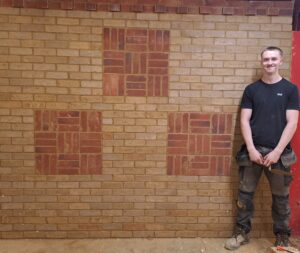
Combining work experience alongside a college bricklaying course, Jake Abram and Josh Meredithbegan their apprenticeships, certain that they wanted to focus on brickwork and that general building wasn’t for them. Jake is honing his skills on new-build houses, while Josh works on flats and residential buildings.
Reading College Bricklaying Tutor Mark Tempest selects students to compete in the prestigious SkillBuild competition each year, knowing it’s an invaluable opportunity for them. Impressed by their enthusiasm and growing skills, he entered them for the regional heat in Hayes in Summer 2025, with clear aims:
‘I want them to have the confidence to be in a situation they’re not normally in – competing against other people – really putting themselves out of their comfort zone and showcasing their talent.’
What is SkillBuild?
SkillBuild brings together the UK’s top construction trainee talent, skilled learners and apprentices to showcase their skills and compete in their chosen trade.
Over 1,000 students, apprentices and trainees participate annually in the SkillBuild Regional Qualifiers, held across the UK from April to July. Typically, around 80 go head-to-head in the 3-day National Final.
The competition covers 10 construction trade categories, including bricklaying, carpentry, painting and decorating, and plastering. The SkillBuild competition is delivered by the Construction Industry Training Board (CITB) and is recognised as the largest and longest-running multi-trade construction skills competition in the UK.
The SkillBuild experience
Mark was delighted with how both apprentices performed under pressure and relished the challenge. He said:
‘It’s helped them to listen, ask good questions, and be patient.’
Jake was apprehensive. Before the competition, he admitted he’d never competed in anything like it before, so it was going to be a bit of a shock. He promised to ‘give it his best shot’ and said he’d be happy as long as they finished. And finish they did.
They were asked what they would take from the overall experience:
‘Learning to work under pressure as everyone is watching you – or you think they are – and you start struggling a bit. So hopefully the ability to work with that, to carry on and use it as something good instead of negative.’Josh
‘Speed – because you’re on a time limit – so you’ve got to have a decent bit of speed. Taking pride in your work as well, making sure the finished product looks good.’Jake
‘It’s given me more confidence in general, that’s the key thing. If you’ve got all the confidence in the world, then you’ll smash it!’Josh
Mark and Josh were interviewed at SkillBuild, and you can watch these using the links below:
Mark Tempest at SkillBuild 2025
Josh Meredith at SkillBuild 2025
Jake Abram and Josh Meredith at Reading College: